Visual Leadership
Back

Tom Russell
2 minute read
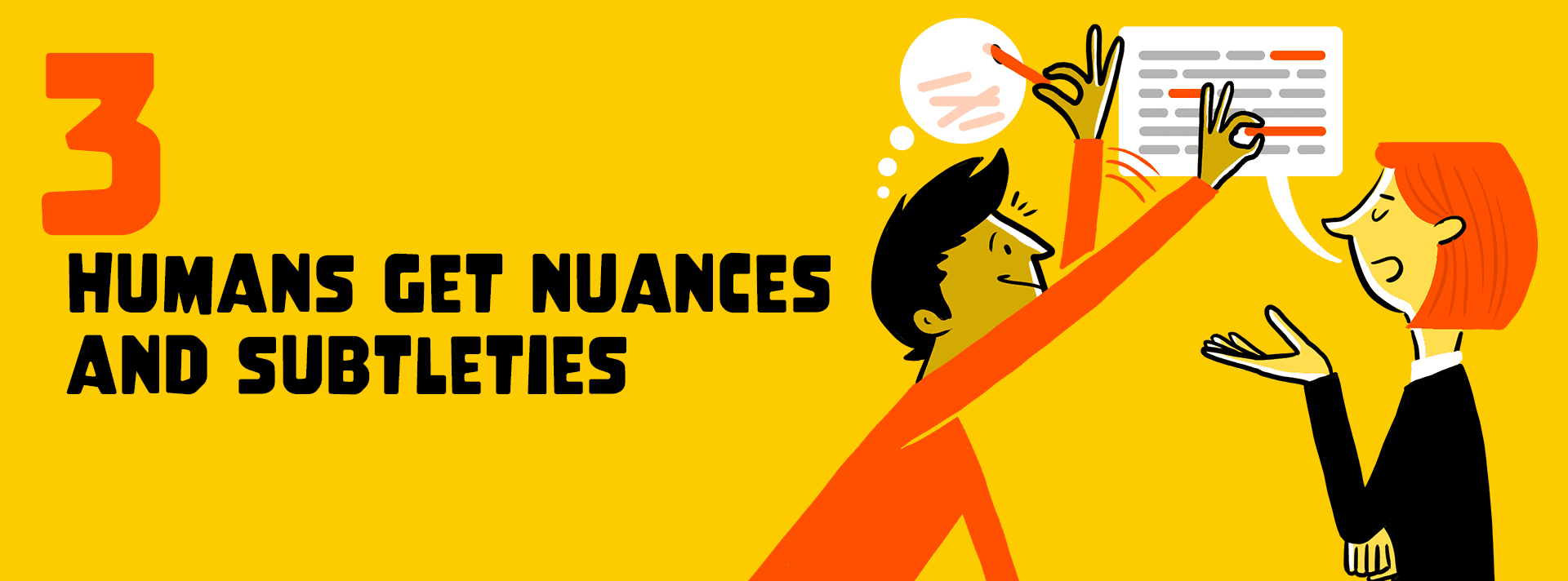
We know that the human brain works quickly and accesses information deeply to reach conclusions and make judgements, but the human brain is also a flexible tool. Interpreting nuances and subtleties is achieved through cognitive flexibility to identify complexities in a scenario or context, incorporating past experiences whilst being open to fresh, new information.
Did you know there’s even a place in the brain called the Wernicke’s area, which is designed to understand the nuances of spoken language? It's this area of the brain plus many others that are working hard when you, the client, pick up the phone to your illustrator to explain your requirements, no matter how unclear you think they may be. Your human illustrator will pick up on those nuances like a bullet, with no forcing of information into AI required. There really is no contest with the human when it comes to understanding small differences which make a very big difference.
At Inky Thinking we’re working on a daily basis with nuances in visual communication. We partnered with a client on the communication of research findings in paediatric intensive care. A core group of stakeholders in this project were children and young people. It was our creative challenge to take these research findings and create imagery that would convey the subtleties of this story to this group who had a very different yet critical perspective.
In Part 4 we will look at the human ability to interpret and generate abstract ideas.
Thank you for reading. If you have enjoyed this post, please share with your networks!


