
Visual Leadership
Back

Tom Russell
2 minute read
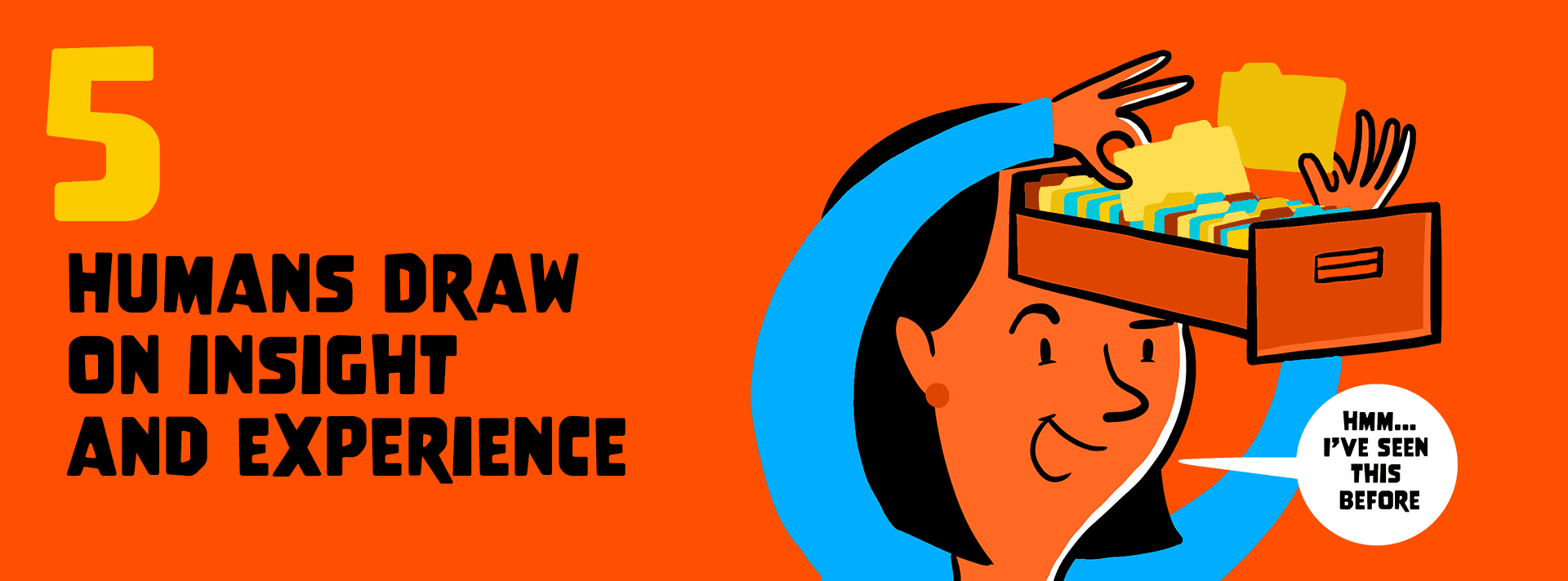
This post considers how the human brain draws on insight and experience. Rather like this post’s illustration, the human brain draws on millions of experiences and applies them to novel situations. For those of us who remember the rolodex (a rotating card file device used to store a contact list), the brain is one of those – on steroids!
Here’s broadly what happens when you get in touch with your human illustrator…
Step 1: You say a cheery hello (illustrators like it when you do that)
Step 2: You explain your requirements to your illustrator, even if your thinking is sketchy or half-formed.
Step 3: Your illustrator will listen to your needs and, before you’ve even finished, their brain will be making, modifying and strengthening neural connections – a process called neuroplasticity. Your illustrator’s brain will be using past experiences to predict and anticipate future events and making guesses based on similar events that have happened before.
Step 4: Your illustrator will offer you their insights and suggestions based on what has worked well previously, proposing a recommended approach or several options that may work well in this scenario. This process is often called 'chunking', where information is efficiently combined to make predictions.
Step 5: You agree on a way forward together before the human illustrator creates a bespoke visual asset designed just for you and your organisation.
The good news is that illustrator won’t need to sit in a darkened room whilst they 'chunk' on the information you have shared. This is what makes the creative human illustrator so much more versatile than AI. AI simply doesn’t know your specific situation and what the best options might be – whether they are tried and tested or completely new.
At Inky Thinking, our live graphic recording work in meetings, conferences and events is a prime example of combining listening skills with knowledge of what works well when capturing specific information. We share our event graphics with each other so the team can see how colleagues have applied their skills to different meetings and topics, thereby building up a reliable visual reference library we can all use live, in the moment.
In Part 6 we will be delving into how the human illustrator knows exactly the right questions to ask you.
Thank you for reading. If you have enjoyed this post, please share with your networks!


